
Understanding Burial Options: A Plain-Language Guide to Choices Families Face
When a family comes to us after losing someone they love, one of the first things we hear is a quiet admission: "We had no idea there were so many choices." That is completely understandable. Burial and final disposition options have expanded considerably over the years, and navigating them while grieving can feel like too much to hold at once.
What follows is a plain-language overview of the most common options families consider. Our hope is that reading through this, at whatever pace feels right, leaves you feeling a little more grounded — not pressured, not rushed, just better informed.
Traditional Ground Burial
This is the option most people picture first. Following a funeral or memorial service, the deceased is placed in a casket and interred in a cemetery. Families typically select a burial plot, a casket, and — if desired — a grave marker or monument. The cemetery itself (a separate organization from the funeral home) manages the plot, so families work with both a funeral home and a cemetery during this process.
Ground burial appeals to many families because it creates a permanent, physical place to visit and remember. For some, that sense of place is deeply meaningful across generations.
Entombment in a Mausoleum
Rather than being placed in the ground, a casket may be placed in an above-ground structure called a mausoleum. Mausoleums can be community structures (holding many families) or private family structures. Entombment is often chosen for personal, cultural, or climate-related reasons. Like ground burial, this option is arranged through a cemetery.
Cremation
Cremation has become one of the most widely chosen options across the country. The process reduces the body to fine mineral remains — often called "cremated remains" or, informally, "ashes" — through the application of high heat.
Families who choose cremation then face a second, entirely separate set of decisions about what to do with the remains. Common choices include:
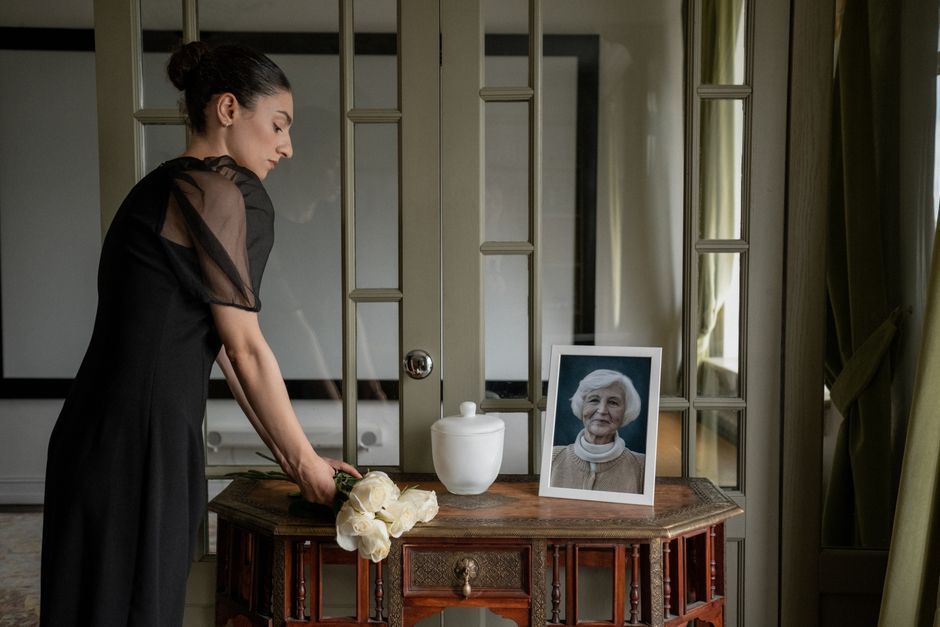
- Keeping the remains at home in an urn that holds personal meaning
- Placing the remains in a cemetery in a burial plot or a niche inside a columbarium (a wall or structure designed specifically for urns)
- Scattering the remains in a meaningful location, subject to local guidelines
- Dividing the remains among family members, sometimes using keepsake jewelry or small memorial vessels
Cremation does not prevent a full funeral service. Many families hold a visitation or service before cremation, or a meaningful memorial gathering afterward — sometimes weeks later, when distant relatives are able to travel.
Green and Natural Burial
Sometimes called "green burial" or "natural burial," this approach prioritizes returning the body to the earth with minimal environmental intervention. It typically involves a biodegradable shroud or casket, no embalming, and a burial site that is managed as natural land rather than a manicured cemetery. Families drawn to this option often describe it as aligned with deeply held values about nature and simplicity.
Availability varies by region, and a funeral home can help a family understand what is accessible in their area.
Aquamation (Alkaline Hydrolysis)
Aquamation — also known by the clinical name alkaline hydrolysis — uses water and a gentle alkaline solution to achieve a result similar to cremation. The process is slower and uses no flame. Some families choose it for environmental reasons; others simply find it feels more gentle. The remains returned to the family are similar in appearance to those from flame cremation. Availability depends on state law and the facilities a funeral home works with.
How Conversations with Our Staff Actually Work
At Probst Family Funeral Homes, we serve families throughout Midway, Heber Valley, Park City, and the surrounding communities of Summit County. When a family sits down with one of our staff members, the conversation does not follow a script and it does not rush toward a decision. We ask questions, we listen, and we explain whatever is unfamiliar — as many times as needed.
"There are no wrong questions here. Every family's situation is its own, and our job is to help you feel clear, not certain that you've made the 'right' choice on a deadline."
Some families arrive knowing exactly what their loved one wanted. Others are starting from scratch. Both are welcome, and both deserve the same unhurried attention.
A Few Questions Worth Reflecting On
If you are in an early stage of planning — either for yourself or for someone you love — these questions may help clarify what matters most:
- Is having a specific place to visit important to you or your family?
- Are there religious, cultural, or personal traditions that shape your preferences?
- How do you feel about environmental considerations?
- Are there practical factors — geography, family spread across distances — that affect timing or gathering?
None of these questions require an immediate answer. They are simply starting points.
Moving at Your Own Pace
Whatever path a family ultimately chooses, it should feel like their choice — informed, considered, and free of pressure. That is the standard we hold ourselves to, and it is what every family who walks through our doors deserves.
If you would like to learn more or speak with someone in person, our teams in Midway and Park City are available to meet with you whenever you are ready.
Photo by RDNE Stock project on Pexels.